Hidden costs to avoid in Camden rubbish removal quotes
Posted on 10/10/2026
If you have ever compared rubbish removal quotes and thought, "That looks fine... but what am I not seeing?", you are not alone. Hidden costs to avoid in Camden rubbish removal quotes can turn a fair-looking price into an expensive headache very quickly. The tricky part is that the surprise charges are often not dramatic on the page; they show up later as a loading fee, access surcharge, parking problem, minimum load charge, or an extra cost for items you assumed were included.
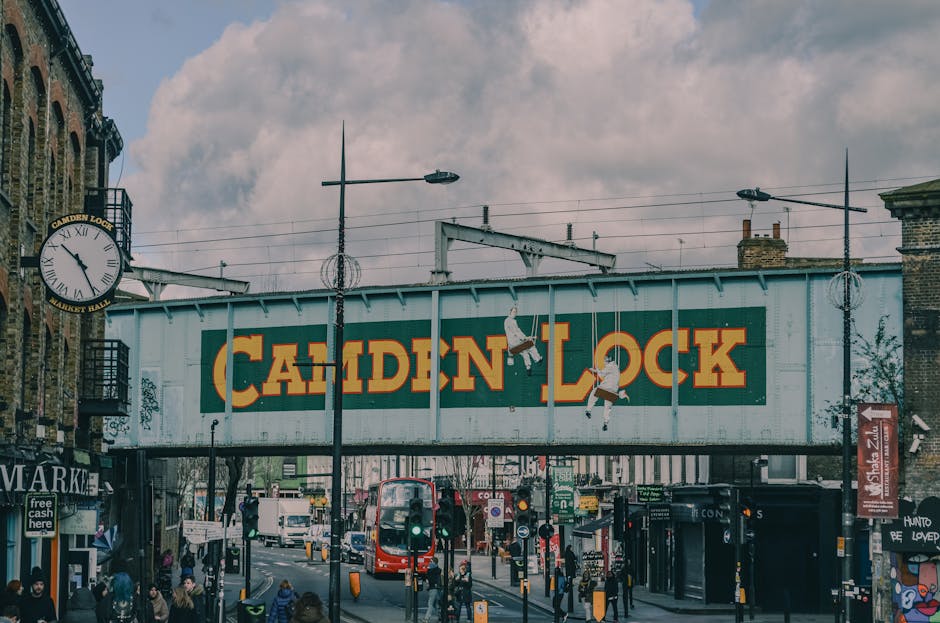
In Camden, that matters even more. Tight streets, basement flats, permit pressure, busy kerbsides, and awkward access can all affect the real price. This guide breaks down what to look for, how quotes are usually built, which extras are legitimate, which ones should make you pause, and how to compare options without getting caught out.
By the end, you will know how to read a quote properly, ask the right questions, and spot the small print before it becomes a bill. A simple bit of checking can save a lot of stress. And a lot of money, too.
Why hidden costs matter in Camden rubbish removal
At first glance, rubbish removal feels simple: you want waste gone, you get a price, and the job gets done. In real life, it is rarely that neat. Quotes can look competitive because they only cover the easiest part of the job, while the actual site conditions, waste type, or timing create extra charges.
Camden is a brilliant part of London, but it is not always a straightforward place to clear waste. Think of narrow roads, shared entrances, limited waiting space, controlled parking, and the odd basement or top-floor flat with no lift. That combination can change the amount of labour needed and, in some cases, the vehicle access too. If a quote is based on a best-case scenario, the final invoice can feel very different.
The problem is not just cost. Hidden fees also make it harder to compare companies fairly. One provider may appear cheaper, but only because they have quietly excluded disposal, VAT, congestion-related work, or awkward-access labour. Another quote might seem higher, yet already include those items. Which one is actually better value? That is the question.
Key takeaway: the cheapest Camden rubbish removal quote is not always the lowest final price. A clearer quote with fewer surprises is often the safer and more honest choice.
There is also the trust factor. If a company is vague before booking, that vagueness usually does not improve on the day. To be fair, nobody enjoys reading small print. But a few minutes now can prevent a very annoying conversation later when the team is already on site and the waste is halfway loaded.
How Camden rubbish removal quotes are usually priced
Most rubbish removal quotes are built from a handful of basic elements. Understanding them helps you spot where extra charges might appear.
1. Volume or load size
Many waste collection quotes are based on how much space your rubbish takes in the vehicle. This might be described in cubic yards, load fractions, or simply "a small van load" or "half load". If your pile is bigger than expected, the price can rise. Sometimes fairly. Sometimes not so fairly.
2. Type of waste
General household rubbish usually costs less than heavier or more specialised waste. Bricks, soil, rubble, plasterboard, fridges, mattresses, electrical items, paint, and mixed builders' waste may all carry different handling or disposal costs. A quote that assumes "general waste only" can become incomplete very quickly if your items include a mix of materials.
3. Labour and access
If the team can park close to the property and lift items straight out, the job is easier. If they have to carry bags down three flights of stairs, around a courtyard, or through a tight hallway, the labour time increases. Access fees are not always bad in themselves, but they should be explained clearly.
4. Disposal and recycling fees
Some companies bundle disposal into the quote. Others show a base collection price and then add disposal charges later. If the quote is not explicit, ask what actually happens to the waste and whether the price includes sorting, transport, transfer station fees, and recycling processing where relevant. A polished sales line is not the same thing as a complete quote.
5. Time-based extras
Same-day collection, evening work, weekend bookings, or waiting time can all affect price. In a place like Camden, where schedules can be tight and access windows may matter, this becomes important fast. If your time slot is specific, confirm whether the timing changes the quote.
6. Additional charges for awkward items
Some items need special handling. That might include broken glass, contaminated materials, large wardrobes that need dismantling, or bulky appliances that require extra manpower. If a quote ignores those realities, the final invoice can be padded with "special item" charges later.
Put simply: a quote should explain what is included, what is excluded, and what might trigger a change. If it does not, you are being asked to guess. Not ideal.
Key benefits of spotting hidden charges early
Checking for hidden costs is not just about saving money, although that is obviously a big part of it. It also makes the whole job smoother.
- Better budget control: you know what to expect before the team arrives.
- Easier comparisons: you can compare like with like instead of comparing half-finished quotes.
- Less dispute later: clear expectations reduce awkward price conversations on collection day.
- Faster decisions: when you know the real cost structure, you can book with confidence.
- Cleaner service experience: fewer surprises usually means a more professional process overall.
There is a practical side, too. If you are clearing a flat before tenants move in, or emptying an office with a deadline, the last thing you need is a delay because someone is renegotiating charges at the kerb. That is the sort of small stress that snowballs. You will notice it.
Another benefit is that a transparent quote often reflects a more organised business. It does not guarantee perfection, of course, but it is a good signal. Businesses that put the effort into clear pricing often do the same with scheduling, safety, and waste handling. Often. Not always, but often enough to matter.
Who this is for and when it makes sense
This guidance is useful if you are arranging any kind of rubbish clearance in Camden and want the final price to match the quote as closely as possible. That includes homeowners, landlords, tenants, letting agents, shop owners, builders, office managers, and anyone dealing with a mixed pile of waste that has been growing quietly in the corner for far too long.
It is especially relevant in these situations:
- You are clearing a basement flat or upper-floor property with difficult access.
- You need same-day or next-day waste collection.
- You are comparing quotes from several companies and they all seem to vary.
- You have a mix of household items, furniture, and heavier waste.
- You need a clearance in a busy Camden street where parking is tight.
- You are handling a move, refurbishment, probate clearance, or end-of-tenancy turnaround.
If any of that sounds familiar, it is worth slowing down before you book. Not because the job is complicated for the sake of it, but because small details can shift the final cost quite a lot.
And if you are a busy person trying to get this sorted between work calls and a train into central London, yes, it is annoying. Still, a few careful questions now are better than a surprise invoice later.
Step-by-step guidance
Here is a practical way to review rubbish removal quotes without getting buried in jargon.
Step 1: List exactly what needs removing
Do a quick walk-through and write everything down. Be specific. "Old stuff from the spare room" is not enough. "One wardrobe, two chest of drawers, six bin bags, one mattress, broken table, and some packaging" is much better.
If there is builders' waste, garden waste, or office junk mixed in, say so early. Different waste types can change the quote significantly.
Step 2: Take photos from a few angles
Good photos save time and reduce misunderstandings. Try to show the full pile, the access route, stairs if there are any, and the nearest parking or loading point if you can. One quick image at 8am in winter lighting might not tell the whole story, so take a couple.
Step 3: Ask what the quote actually includes
Do not stop at the headline price. Ask whether the price includes loading, labour, disposal, recycling, VAT, congestion-related costs, and travel. If the answer is vague, that is your signal to keep asking.
Step 4: Check for minimum charges
Some providers have a minimum charge even for a small load. That is not automatically unfair, but it should be stated clearly. If your pile is modest, a minimum fee can make a small job surprisingly expensive.
Step 5: Confirm access assumptions
Ask what happens if the team cannot park directly outside or if they need to carry items farther than expected. In Camden, this matters a lot. Narrow streets and controlled spaces are part of daily life here, not rare exceptions.
Step 6: Clarify special-item pricing
Ask about mattresses, fridges, freezers, sofas, TVs, tyres, rubble, and anything hazardous or awkward. Some items are fine, but they may have separate handling costs. Better to know now than hear it when the van is already outside.
Step 7: Get the final number in writing
Whatever the channel-email, text, or quote form-make sure the agreed price and any conditions are written down. A verbal promise can be forgotten fast when someone is in a hurry.
Step 8: Compare overall value, not just price
The best quote is the one that is clear, fair, and realistic for your site. A slightly higher price may actually be better if it includes everything and avoids the back-and-forth.
If you want to see how a clearer pricing structure should look, our pricing and quotes page is a useful place to start. It can help you understand what a more transparent estimate normally covers.
Expert tips for better results
From experience, the smoothest jobs usually come from the least glamorous habit: getting the details right before anyone turns up.
Tip 1: Assume access is harder than you think
In Camden, access often takes longer than the waste itself. If a lift is out of service, a courtyard is locked, or parking is a little walk away, the job changes. Quote accordingly. It is better to over-explain than under-explain.
Tip 2: Separate your waste if you can
If it is safe and practical to do so, keep reusable or recyclable items apart from mixed junk. This can make the job cleaner and may reduce disposal complexity. For example, cardboard, wood, and general rubbish do not always belong in the same priced pile.
Tip 3: Watch for "from" pricing
A quote that says "from GBPX" is not necessarily bad, but it is incomplete unless the trigger for the higher price is explained. Ask what conditions move the price upward. If the answer is "basically anything", well... that tells you a lot.
Tip 4: Ask about labour thresholds
Some companies quote on a set labour allowance, then add charges if the job takes longer than expected. That might be fair for a complicated clearance, but it should be spelled out. No one likes timing surprises.
Tip 5: Make sure you know whether VAT is included
It sounds basic, but this is one of the most common places where a quote can feel misleading. A price without VAT can look lower on paper, then jump at invoice stage. Always ask for the full amount payable.
Tip 6: Be careful with urgency
Same-day bookings are handy when you need a fast clear-out, but urgency can bring convenience fees. That does not make the service poor. It just means you should know the premium before you say yes. If you are comparing options for faster collections, our same-day rubbish removal availability article gives a useful local perspective.
One more small thing: if the quote sounds too neat, ask a follow-up question. The tidy answer is not always the honest one. A bit cheeky, perhaps, but true.
Common mistakes to avoid
People usually do not get caught out because they are careless. More often, they are busy and the quote looks simple enough. These are the mistakes that cause the most trouble.
- Accepting the first quote without checking what is included.
- Not mentioning access issues. Staircases, tight entrances, and parking restrictions matter.
- Forgetting about special items. Mattresses and appliances often need separate handling.
- Ignoring VAT. A cheap-looking quote can become expensive at the last minute.
- Assuming disposal is included. That should never be assumed.
- Leaving waste type descriptions too vague. "A bit of everything" is not very helpful, honestly.
- Not asking about waiting time or failed-access charges. These can sting if the property is hard to reach.
A lot of these errors are avoidable with one calm conversation. Or two. The important part is asking before the job, not after the van has arrived and everybody is in that awkward half-smile mode.
Tools, resources and recommendations
You do not need fancy software to compare quotes properly. A few simple tools and habits are enough.
A simple quote comparison note
Use a notepad or phone note with columns for:
- company name
- what is included
- VAT included or not
- access assumptions
- special item charges
- minimum charge
- collection window
- final price confirmed
This makes it much easier to compare one quote with another without relying on memory, which, to be fair, gets fuzzy once you have read three similar emails.
Photos and measurements
Take a few clear photos and, if possible, a rough estimate of the pile size. Even a simple "about the size of a three-seater sofa plus six sacks" can help. It does not need to be perfect. It just needs to be useful.
Service pages that can help
If you are looking at a broader clearance rather than just a one-off rubbish load, it can help to understand the service type that fits your situation. For example, you may want to review waste removal in Camden, or compare it with rubbish collection in Camden and house clearance in Camden. The right service usually depends on volume, access, and what exactly needs taking away.
Company information worth checking
It is also sensible to read a company's pages on insurance, safety, and sustainability. These do not replace a proper quote, but they do help you judge how seriously the business handles risk and disposal standards. You can review information such as insurance and safety and recycling and sustainability.
That may sound a bit formal for a rubbish job, but honestly, it matters. Waste removal is one of those jobs where being organised in the background makes everything easier in the foreground.
Law, compliance, standards and best practice
When rubbish is removed from a property, the work should be handled responsibly and in line with normal UK waste-handling expectations. You do not need to become a legal expert, but there are a few sensible principles to keep in mind.
First, waste should be transported and disposed of properly. Reputable companies should be able to explain where waste goes and how recyclable materials are handled. If they cannot explain that in plain English, that is a warning sign. Second, if access or parking is tricky, the company should plan around local conditions rather than surprise you with added charges after the fact. That is basic fairness, really.
Third, safety matters. Heavy lifting, sharp objects, broken furniture, and electrical items all carry risks. Proper handling, appropriate vehicles, and sensible insurance coverage are part of a professional service. If you are clearing from a basement, loft, or tight staircase, this becomes even more important.
For many customers, the most practical best practice is simple: ask for a clear written quote, ask what can change the price, and confirm who is responsible for loading, disposal, and any extra labour. Not glamorous, but effective.
If you want a little more about how a company frames trust and service standards, the about us page and services overview can also help you understand the broader approach before you book.
Options and comparison table
When you are comparing Camden rubbish removal quotes, it helps to think in terms of quote quality rather than just price level. Here is a straightforward comparison of common approaches.
| Quote style | What it usually means | Pros | Risks |
|---|---|---|---|
| Very low headline price | Basic rate shown, extras added later | Looks cheap at first | Hidden labour, VAT, disposal, or access charges |
| Fixed all-in quote | Price includes agreed scope and common extras | Clearer budgeting, fewer surprises | May be slightly higher upfront |
| Volume-based quote | Price depends on how much space the waste takes | Fair for mixed-size loads | Can rise if your estimate is off |
| Site-assessed quote | Based on photos or a visit | Best for awkward access or larger jobs | Takes more time to arrange |
In general, a fixed all-in quote is the easiest to trust if your job is straightforward. But if your property has awkward access, mixed waste, or a large volume, a site-assessed quote can be more accurate. That is especially true in Camden, where the street outside the property can matter almost as much as the pile inside it.
If you are handling a more specialised job, such as builders' rubble or garden waste, it can help to compare service-specific pages too. See builders' waste disposal and garden waste removal for clearer context on how different waste types are usually handled.
Case study or real-world example
Here is a realistic Camden scenario.
A resident in a basement flat near a busy street needed a mix of items removed: a mattress, a wardrobe, several bags of household rubbish, and some broken shelving. The first quote looked attractive because it was quick and low. But the small print only covered curbside loading and assumed easy access.
Once the resident explained that the items had to come up from a basement level and through a narrow shared entrance, the estimate changed. There was also no easy parking spot directly outside. Suddenly, the "cheap" quote was not cheap any more. To be fair, the revised price was not unreasonable once the access reality was clear. The problem was the original quote had never reflected the actual job.
A second provider asked for photos, checked the item list, and confirmed the likely labour time, disposal, and access conditions before giving a final price. That quote was a little higher on paper, but it stayed the same on the day. No drama, no awkward back-and-forth, no one pretending not to hear the small print.
This is the difference a proper quote process makes. The real value was not just in the number. It was in the certainty.
If your property has similar access challenges, you may also find our local article on basement flat clearance tips useful, especially where stairs and loading access are part of the problem.
Practical checklist
Use this before you accept any Camden rubbish removal quote.
- Have I listed every item clearly?
- Have I sent photos from enough angles?
- Does the quote include loading and labour?
- Is disposal included?
- Is VAT included in the final price?
- Have I mentioned stairs, basements, lifts, or narrow access?
- Have I asked about parking or waiting-time charges?
- Are special items priced separately?
- Is there a minimum charge?
- Have I asked what happens if the load is bigger than expected?
- Have I got the agreed price in writing?
- Does the service fit my waste type and urgency?
If you can tick most of those off, you are in a much better position. Not perfect, maybe. But much better. And that is usually enough to avoid the worst surprises.
Conclusion
Hidden costs to avoid in Camden rubbish removal quotes are rarely hidden because they are impossible to find. More often, they are hidden because people are in a hurry, the wording is vague, or the job is assumed to be simpler than it really is. Once you know where the surprises tend to appear, you can spot them quickly.
Focus on the basics: the type of waste, how much there is, access conditions, parking, disposal, VAT, and any special-item charges. Ask for a written quote. Make sure the price matches the reality of your property, not just the best-case version of it. That one habit alone can save a lot of money and a fair amount of stress.
Get a free quote today and see how much you can save.
And if you are still comparing options, take your time. A clear quote is usually worth a little more than a rushed one. In the end, peace of mind counts for quite a lot.

Copyright © . House Clearance Camden. All Rights Reserved.